Tuesday, 3 September 2019

New Publication on Ticks and Seabirds!

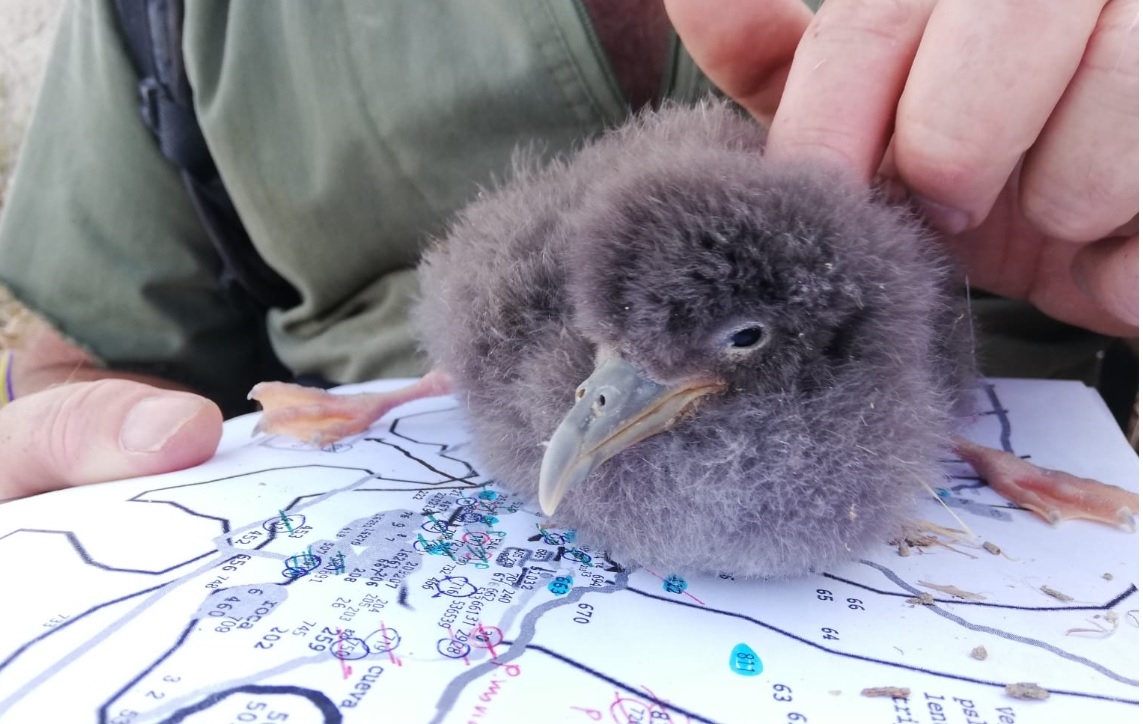
Sanz-Aguilar,A., Payo-Payo, A., Rotger, A., Yousfi, L., Moutailler, S., Beck, C., Dumarest, M.,Igual, J.M., Miranda, M-A., Viñas Torres, M., Picorelli, V., Gamble, A., Bouliner T. 2019: Infestation of small seabirds by Ornithodoros maritimus ticks: Effects on chick body condition, reproduction and associated infectious agents Ticks and Tick-borne diseases, doi https://doi.org/10.1016/j.ttbdis.2019.101281

Abstract: Ticks can negatively affect their host by direct effects as blood feeding causing anaemia or discomfort, or by pathogen transmission. Consequently, ticks can have an important role in the population dynamics of their hosts. However, specific studies on the demographic effects of tick infestation on seabirds are still scarce. Seabird ticks have also the potential to be responsible for the circulation of little known tick-borne agents, which could have implications for non-seabird species. Here, we report the results of investigations on potential associations between soft tick Ornithodoros maritimus load and reproductive parameters of storm petrels Hydrobates pelagicus breeding in a large colony in a cave of Espartar Island, in the Balearic archipelago.
We also investigated by molecular analyses the potential viral and bacterial pathogens associated with O. maritimus ticks present at the colony. Lower nestling survival was recorded in the most infested area, deep in the cave, compared to the area near the entrance. The parasite load was negatively associated with the body condition of the nestlings. One pool of ticks tested positive for West Nile virus and 4 pools tested positive for a Borrelia species which was determined by targeted nested PCR to have a 99% sequence identity with B. turicatae, a relapsing fever Borrelia. Overall, these results show that further investigations are needed to better understand the ecology and epidemiology of the interactions between ticks, pathogens and Procellariiform species.

Tuesday, 6 August 2019

Upcoming Capture-Mark-Recapture courses!

WORKSHOPS ON CAPTURE-RECAPTURE ANALYSES 2019

2019 WORKSHOPS ON CAPTURE-RECAPTURE ANALYSES. MALLORCA, SPAIN

New this year!!!! Two CMR courses in a row:
Introductory course    (26-29 November, 20 places, 300 Є)
Multievent course    (2-4 December, 20 places, 300 Є).
Pick up your level or join both (500 Є)!!! 

INTRODUCTORY COURSE: 26-29 November 2019, Mallorca, Spain  (places: 20, price 300 Є)
This introductory course aims to introduce students, researchers and environmental managers to the theory and practical aspects of the analysis of capture-mark-recapture and –recovery data to estimate survival, recruitment and dispersal probabilities. The course is based on theoretical classes as well as practical sessions with real and simulated data. The format of the course will be a combination of lectures and computer lab exercises with programs MARK, U-CARE and R (optional). No previous knowledge of these programs is needed.  To register send a message specifying the course to: 

g.tavecchia-at-uib.es

Dead line for registration: 15 October 2019
More info here

MULTIEVENT COURSE: 2-4 December 2019, Mallorca, Spain (places: 20, price 300 Є)

This course aims to provide participants with a solid background in the theory and practices of capture-recapture analysis with a specific emphasis on multievent data and models. Multievent models are a natural generalization of the multisite models. Contrary to multisite models, the uncertainty in sate assessment such as breeder, diseased, causes of death or capture heterogenity can be incorporated into the analysis. They can be use to address fine questions on epidemiology, conservation and hiddenbiological processes. The format of the workshop will be a combination of lectures and computer lab exercises with the programs E-SURGE (or R2ESURGE) and U-CARE. No previous knowledge is needed although experience with CMR data and R-programming will be useful. To register send a message a message specifying the course to: 

remi.choquet-at-cefe.cnrs.fr

Dead line for registration: 15 October 2019
More info here

Tuesday, 30 July 2019

Shearwater campaign (part I) ended!

Today was the last visit to the Shearwater colony to measure hatching success. 

Next visit in September to ring the chicks before they leave Europe for their first journey across the Atlantic Ocean.


Wednesday, 24 July 2019

Award! "J Benedí" fellowship to A. Sola Galindo

A. Sola Galindo was awarded (here) with a "Javier Benedí" fellowship by the IMEDEA within the "JAE Intro ICUs” program of the Spanish Research Council (CSIC). Alfonso will (re)-join the GEDA for three months. His work, supervised by A. Sanz-Aguilar, will deal with seabird movements in relation to oceanic variables. The research will be highly interdisciplinary with collaborations with other three groups of the IMEDEA.

Monday, 22 July 2019

Urban Ecology on the air, each saturday at BFC

Each Saturday morning at "Balear Fa Ciencia", Alvaro Luna will share his experience on the study the ecology of those animals that live in the urban enviornment. Here his last interview of Saturday 20th of July 2019 (at 32'45'') about the decrease of once common species.

Monday, 15 July 2019

GEDA at the first ATIt summer school!

Last week GEDA was invited to the first Summer School on Small Mammal Study organized by the small mammals specialist group of the Italian Mammal Society  (ATIt), at the botanic garden of Capracotta - Isernia (here). 

Participants have learnt concepts and techniques to monitor small mammal populations. 
The location was great and the hospitality incredible (thank to Carmen!!). Overall, the event was a success (more pics here).  We look forward to the second!


Monday, 8 July 2019

Benidorm beaches and Storm Petrel!

The Benidorm City Council has prepared panels to inform people what to do when they recover Storm Petrels stranded on city's beaches attracted by the artificial lights. A good initiative promoted by Ana Sanz-Aguilar and the long-term project of Storm Petrel at Benidrom Island.
More here.


Friday, 5 July 2019

Gulls' summer vacation : a new route to the Atlantic!

Gulls began to move north to colder waters (or better landfills).The Ebro route is confirmed, but one gull showed us a new route to the Atlantic !!! Something we have suspected in the past but never proved : the route Narbonne-Toulouse-Bordeaux.


Subscriptions to CMRR 2026 workshop open!

Subscription to the upcoming workshop on CMRR analysis, now open.  INTRODUCTORY COURSE : 23 - 27 Nov. 2026, Mallorca, Spain     (places: 20,...